
Birch plywood grades can be confusing. You may see descriptions such as B/BB, BB/BB, BB/CP or CP/C when comparing sheets. The letters describe the appearance and allowable characteristics of the outer veneer faces, not simply whether one sheet is “stronger” than another.
This guide explains what the common birch plywood grades mean, shows real-world examples of the differences and explains which grade is normally suited to furniture, cabinetry, visible joinery, shelving, packaging and less visible construction work.
What do B, BB, CP and C mean on birch plywood?
Birch plywood is made from multiple layers of birch veneer. The grade refers primarily to the appearance and permitted defects in the outer veneer faces. Typical grades used in birch plywood specifications include B, BB, CP and C, although exact grading terminology and permitted characteristics can vary with the applicable standard and manufacturer.
When two grades are written together, such as B/BB, the first grade describes one face of the sheet and the second grade describes the opposite face. This is important when the plywood will be visible on both sides.
Cleaner, more uniform face
B is a high appearance grade. The face is generally selected for a cleaner and more uniform natural appearance, with only limited permitted characteristics such as small knots, colour variation or properly made repairs depending on the governing specification.
Typical uses: visible furniture components, cabinet doors, decorative panels and projects where a clear or natural finish is important.
Good furniture and joinery grade
BB permits more natural characteristics and repairs than B. Small knots, plugs, patches and colour variation are more likely to be visible. It is still a popular choice where a good birch appearance is wanted without paying for the cleanest possible face.
Typical uses: cabinets, drawers, shelving, furniture, workbenches and general joinery.
More visible natural defects
CP permits more pronounced characteristics than BB, including more knots, repairs and variation. It is generally selected where appearance is less critical or where the face will be painted, covered or hidden.
Typical uses: concealed furniture components, packaging, industrial work and applications where surface appearance is secondary.
Lower appearance requirement
C is a lower appearance grade and can contain considerably more obvious natural defects and repairs. It is normally chosen where the visible appearance of the plywood is not important.
Typical uses: hidden components, packaging, temporary work and applications where appearance is not a priority.
Real examples: what do the different grades actually look like?
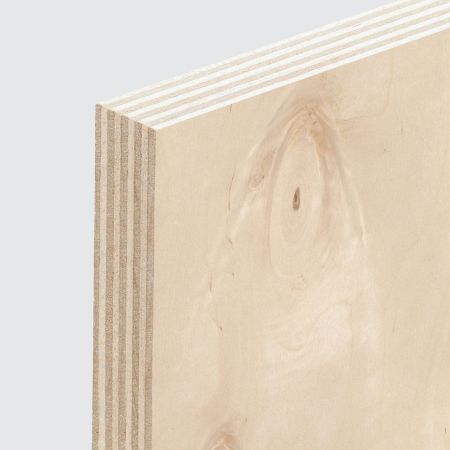
The easiest way to understand plywood grading is to look at real panels. The photographs below are examples published by plywood suppliers and manufacturers and are included to illustrate the type of variation you can expect. They should not be treated as a guarantee of the exact appearance of every sheet, because natural timber varies and individual manufacturers can apply different grading specifications.

On the B face in this example, the surface is comparatively clear and consistent. On the BB face, small pin knots and repaired areas are more apparent. These visible characteristics are one of the main reasons a BB face is normally less expensive than a cleaner B face.
What does B/BB mean?
B/BB means one B grade face and one BB grade face. The B face is normally selected for the side that will be seen, while the BB face can be turned towards the inside or another less prominent area.
This makes B/BB a useful specification for furniture and joinery where one face needs to have a cleaner appearance but the reverse does not need to be as visually consistent.
What does BB/BB mean?
BB/BB means both faces are BB grade. This can be a practical choice when both sides of the sheet will be visible but a small amount of natural variation, knots and repairs is acceptable.
BB/BB is commonly used for furniture, cabinets, shelving, interior joinery and other projects where appearance matters but a premium B face on both sides is not necessary.
What does BB/CP mean?
BB/CP means one face is BB grade and the other is CP grade. This can be a cost-effective specification when one face will be visible and the reverse will be hidden, painted or otherwise less important.
For example, a cabinet side may show the BB face externally while the CP face is positioned towards the inside or against another component.
Common birch plywood grade combinations
| Grade | What it means | Typical applications | Appearance |
|---|---|---|---|
| B/B | B grade on both faces | High-appearance furniture, visible joinery and decorative work | Very clean and consistent compared with lower grades |
| B/BB | B face and BB face | Furniture, cabinet doors, visible panels and joinery | Clean show face with more natural characteristics on reverse |
| BB/BB | BB grade on both faces | Cabinets, drawers, shelving, furniture and general joinery | Good appearance with visible knots, plugs and repairs permitted |
| BB/CP | BB face and CP face | Furniture carcasses, hidden components and cost-sensitive joinery | One reasonable face and one more heavily featured face |
| CP/CP | CP grade on both faces | Industrial work, packaging and concealed applications | More knots, repairs and natural variation |
| CP/C or C/C | Lower appearance grades on one or both faces | Hidden work, packaging and applications where appearance is not important | Greater visible variation and permitted defects |
Does a higher plywood grade mean stronger plywood?
Not necessarily. This is one of the most important points when buying birch plywood.
The B, BB, CP and C designations primarily describe the appearance and permitted characteristics of the veneer faces. They should not be used on their own to decide whether a plywood panel is suitable for a structural, load-bearing, humid or external application.
For technical suitability, also check the plywood's construction, thickness, glue bond, service class, relevant standard and manufacturer's technical information. Birch plywood suppliers may offer the same species with different face grades and different bonding specifications.
For example, Falcon Panel Products lists birch plywood in grades including B/BB, BB, BB/CP, CP and C and notes that its birch plywood range can be supplied with different glue specifications. This illustrates why grade and bond specification should be considered separately.
Which birch plywood grade should I choose?
For visible furniture
Choose B/BB where one face is the main show face. If both sides are visible and you want a consistent appearance, consider B/B or BB/BB depending on the finish and your tolerance for natural characteristics.
For cabinets and cupboards
BB/BB is often a sensible balance between appearance and cost. B/BB can be preferable when the outside face needs to look particularly clean.
For drawers
BB/BB can be a practical choice where the drawer construction is visible and you want a good-looking birch plywood without specifying a premium face on every surface.
For shelving
BB/BB is suitable when both faces may be visible. If only one face is exposed, B/BB can give you a cleaner show face without paying for the same grade on the reverse.
For hidden or painted components
BB/CP or CP/CP may be more economical where the plywood will be painted, covered, positioned inside a cabinet or otherwise hidden.
For packaging and industrial applications
Lower appearance grades can be appropriate when the performance and construction of the panel matter more than the visual finish.
Grade is only one part of the specification
When comparing birch plywood, do not look at the grade letters in isolation. Also consider:
- Thickness: choose the thickness required for the job and the loads involved.
- Number and construction of veneers: birch plywood is commonly made from multiple layers, giving a stable and consistent panel.
- Bonding: check whether the plywood is intended for interior, humid or exterior conditions.
- Surface: check whether the faces are sanded and whether the surface is suitable for your chosen finish.
- Sheet size: choose a size that minimises joins and cutting waste.
- Certification and standards: where relevant, check the manufacturer's declared standards and certification.
Plan your plywood requirement before ordering
Choosing the right sheet size can make a significant difference to waste. Plywood Etc's sheet material calculator allows you to enter your project dimensions, select the material and compare available sheet sizes. It also allows you to add a cutting waste allowance.
Use the Plywood Etc Sheet Material Calculator
Work out an estimated number of plywood sheets for your project and compare different sheet sizes before you order.
Calculate how many sheets you needFrequently asked questions about birch plywood grades
What is the best grade of birch plywood?
There is no single best grade for every application. B is a cleaner appearance grade, while BB, CP and C progressively allow more natural characteristics. The right grade is the one that gives you the required appearance without paying for a specification you do not need.
Is B/BB better than BB/BB?
B/BB has a cleaner B face and a BB reverse, whereas BB/BB has BB faces on both sides. If one face is prominently visible, B/BB can be the better choice. If both faces need to be reasonably presentable, BB/BB can be a practical option.
What is the difference between B and BB plywood?
B grade allows fewer and less noticeable surface characteristics than BB. BB can contain more visible knots, plugs, patches and colour variation.
Is BB grade plywood suitable for furniture?
Yes. BB/BB birch plywood is widely used for furniture, cabinets, shelving and joinery where natural knots and repairs are acceptable as part of the appearance.
Can I paint BB or CP birch plywood?
Yes, but the surface should be properly prepared and the permitted repairs, knots and colour variation should be taken into account. A lower appearance grade may require more preparation if you want a very uniform painted finish.
Does plywood grade affect strength?
Face grade mainly describes appearance and permitted veneer characteristics. Strength and suitability depend on the overall plywood construction, thickness, bonding, veneer quality and applicable performance classification.
What does the first letter mean in B/BB?
The first grade identifies one face of the sheet and the second grade identifies the opposite face. B/BB therefore has a B grade face and a BB grade face.
Useful references
- SPP: Birch Plywood Face Grade Comparison – useful real-world examples of B and BB face appearance and permitted characteristics.
- Falcon Panel Products: Birch Plywood – information on birch plywood grades, sizes, thicknesses and bonding options.
- SGK Nordic: Birch Plywood – product information and an example of CP grade birch plywood.
- Plywood Etc: Sheet Material Calculator – calculate estimated sheet quantities and compare sheet sizes.
Important: Plywood grading terminology can vary between products, manufacturers and standards. Photographs are useful for understanding the general appearance of grades but should not be used as a substitute for the manufacturer's technical specification when appearance tolerances, structural performance, bonding or certification are critical.